

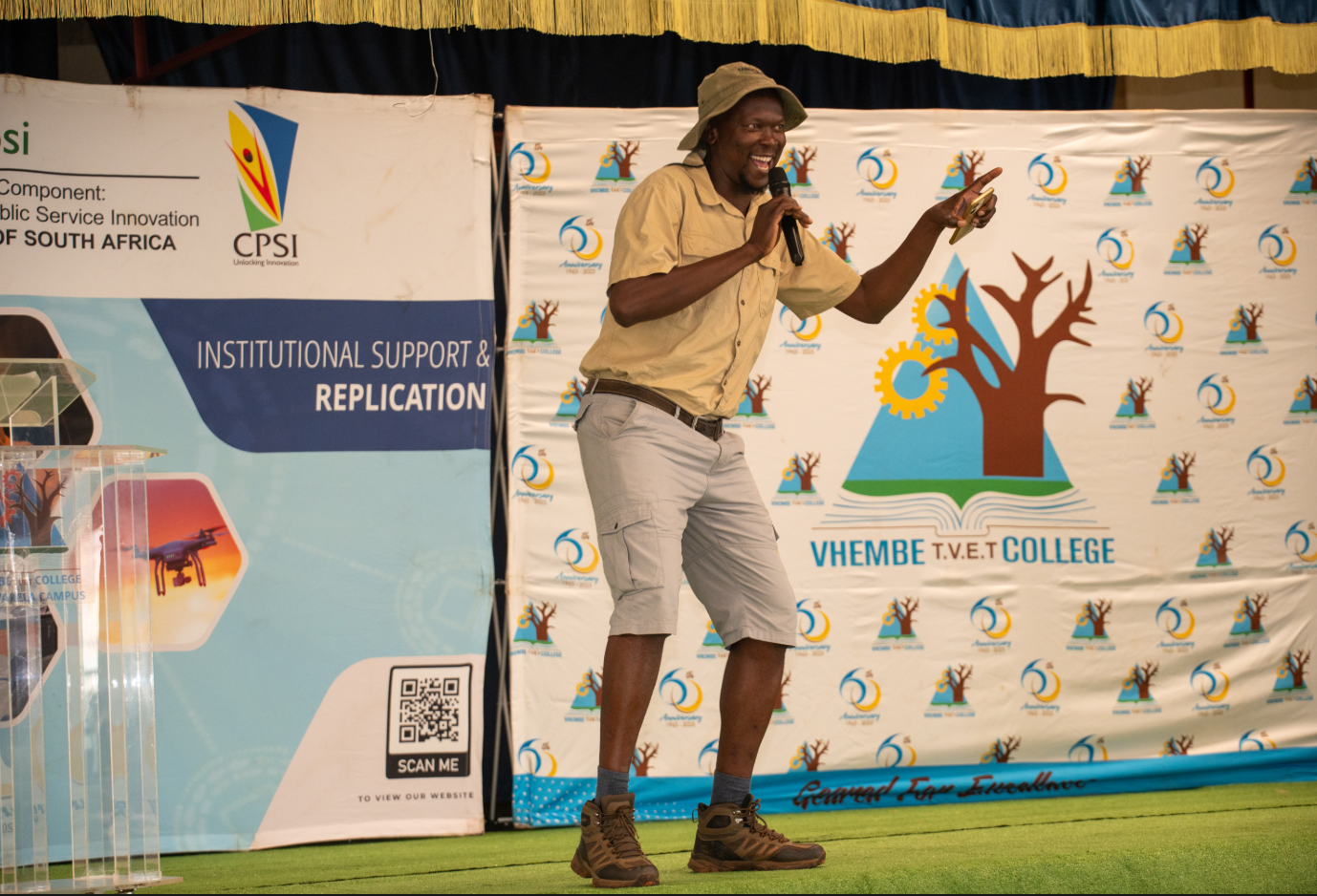
What if a simple photograph of a flower, butterfly, or bird could contribute to scientific research and biodiversity conservation? This is exactly what learners discovered during the Kidathon 2026 – Digital Literacy and AI Empowerment Programme held at Vhembe TVET College from 28 to 30 April 2026.
The programme, organised by Geekulcha with in collaboration with AfreeConnect, and the Centre for Public Service Innovation (CPSI), aims to equip learners and educators with digital skills, artificial intelligence literacy, coding competencies, and responsible digital citizenship. More importantly, it demonstrates how technology can create opportunities in agriculture, tourism, entrepreneurship, and environmental sustainability. Among the organisations participating in the programme was Thohoyandou National Botanical Garden (NBG), which introduced learners to the exciting world of citizen science through the iNaturalist platform.

Presenting on behalf of the garden, Mashudu Nndanduleni challenged learners to think differently about technology and social media. iNaturalist is not Facebook, not WhatsApp, not Instagram, not YouTube, not TikTok, not X, and not LinkedIn, as he explained. It is a free and friendly citizen science platform that connects people with nature while helping scientists collect important biodiversity data.

The message immediately sparked curiosity among the learners. They were fascinated to learn that ordinary people can make meaningful contributions to science simply by observing and recording plants, animals, insects, fungi, and other organisms in their surroundings.
Learners were introduced to the basics of biodiversity monitoring and shown how iNaturalist allows users to upload photographs, record locations, and identify species. These observations become part of a global database used by researchers, conservationists, and environmental managers to better understand and protect biodiversity.

The session also explored plant identification techniques, including the use of plant identification keys, field guides, and herbarium specimens. Learners were then guided through a practical demonstration of how to capture photographs, upload observations, record field data, and identify species using iNaturalist.
The highlight of the day came when the learners stepped outside and put their newly acquired skills into practice. Armed with smartphones and a sense of curiosity, they began exploring the surrounding environment, recording observations and discovering the rich biodiversity around them. The excitement was evident as many learners created

their own iNaturalist accounts and started uploading observations. What began as a digital literacy workshop quickly transformed into an inspiring journey of scientific discovery.
By combining technology with environmental education, Thohoyandou National Botanical Garden is helping to nurture a new generation of environmentally conscious citizens. Through platforms such as iNaturalist, young people are not only learning about nature but are also actively contributing to its conservation. As these young citizen scientists continue to document the natural world around them, they are proving that anyone, regardless of age or background, can play a role in protecting biodiversity— one observation at a time.