

By Mashudu Nndanduleni and Renda Khohomela
Our educational journey to the Pafuri region of Kruger National Park was an unforgettable experience that deepened on our understanding of nature, conservation and the important role protected areas play in preserving South Africa’s natural and cultural heritage. Throughout our visit, we reflected on the valuable lesson’s knowledge gained from Pafuri and discovered how every aspect of nature and discovered how every component of environment is interconnected. Every tree, animal, mountain, rock, and river revealed a unique story of resilience, survival and harmony, reminding us that the natural world provides lessons that can be inspire our daily lives.

We arrived early in the morning after a two-hour drive and stopped at the entrance gate for registration. Excitement filled the air as everyone began taking photographs and asking questions about the park’s rules and safety guidelines. The tourism monitors who welcomed us answered every question professionally and with a warm smile, setting a positive tone for the day.

As we drove into the park, magnificent Mopane (Colophospermum mopane) woodlands stretched along both sides of the road. Dry elephant dung was scattered across the landscape, evidence of the wildlife that they often passed through. For several kilometres we saw no large animals, although the bush was alive with the songs of numerous birds. Soon, we noticed even more fresh elephant dung and jokingly agreed that whoever spotted the first animal would be the luckiest among us.
One fascinating observation was seeing three butterfly species, Southern African Caper White (Belenois creona ssp. severina), Small Ant-heap White (Dixeia pigea) and African Migrant (Catopsilia florella), feeding on fresh elephant dung. This behaviour, known as mud-puddling, allows butterflies to obtain essential minerals, salts, amino acids, and nutrients such as sodium that are absent from nectar. Male butterflies often transfer these nutrients to females during mating, making this an important part of their reproductive success. Witnessing this remarkable ecological interaction was an unforgettable learning experience.
As our journey continued, we encountered several bird species, including the Namaqua Dove (Oena capensis), White-fronted Bee-eater (Merops bullockoides), and Water Thick-knee (Burhinus vermiculatus), whose calls added life and beauty to the peaceful landscape.

One of the highlights of the excursion was learning about the remarkable tree species that form the foundation of the Pafuri ecosystem. The Mopane tree, recognised by its distinctive butterfly-shaped leaves, thrives in harsh semi-arid conditions where some other trees struggle to survive. It provides shade for smaller animals and serves as an important food source for elephants, making it a symbol of
strength and endurance. Although elephants feed aggressively by breaking branches, stripping bark, and damaging stems, this browsing stimulates the Mopane to coppice, producing new shoots that remain within reach for future feeding. This demonstrates the remarkable resilience of both the tree and the ecosystem.

We also admired the elegant White Seringa (Kirkia acuminata), whose tall trunk and delicate branching patterns become especially striking during winter when the trees stand leafless against African woodlands.
Among the many thorn trees we observed, the Fever Tree (Vachellia xanthophloea) stood out because of its striking yellow-green bark and broad, spreading crown. Besides its visual appeal, it provides important nesting sites for birds and shelter for numerous other species, contributing significantly to the biodiversity of the area.
Another remarkable species was the Nyala Tree (Xanthocercis zambesiaca), which grows mainly on floodplains, riverbanks, valleys, clay soils, and termite mounds. Its nutritious foliage and seeds provide valuable food for antelope and other herbivores, illustrating the close ecological relationship between plants and wildlife.

Perhaps the most inspiring tree of all was the magnificent Baobab (Adansonia digitata), often referred to as the “Tree of Life”. These ancient giants store enormous qualities of water within their massive trunks while providing shelter, nesting sites and food for numerous birds and animals. During winter, many Baobabs stand leafless, revealing their unique architectural forms. Some resemble windmills, while others display twisted branches reaching toward the sky. Despite extensive elephant damage through bark stripping and pushing against their trunks, these remarkable trees continue to survive, heal, and stand as enduring.

Our wildlife encounters further enriched the experience. Watching elephants strip bark and break branches demonstrated both their immense strength and their influence on the surrounding environment. We also observed graceful South African Giraffes (Giraffa giraffa ssp. giraffa), Chapman’s Zebras (Equus quagga chapmani), impalas, and springbok peacefully grazing across the open landscapes. Capturing a photograph of two giraffes standing together against the African sky was one of the highlights of the day.

Crossing the Luvuvhu River was another memorable experience. We stopped on the bridge to observe the river below and were rewarded with sightings of two crocodiles basking along the riverbank. Students eagerly used their binoculars to search for birds and aquatic wildlife, hoping to spot the Common Hippopotamus (Hippopotamus amphibius). Standing on the bridge, we appreciated the sheer size of the Luvuvhu River and imagined the immense volumes of water it carries during the rainy season.
One of the most unforgettable moments was visiting the Crook’s Corner, where South Africa, Zimbabwe and Mozambique meet. Here we witnessed the confluence of the Limpopo and Luvuvhu Rivers – a powerful of unity and cooperation. This historic location combines extraordinary natural beauty with rich cultural and political history. Friendly SANParks rangers shared fascinating insights about the area, making the visit even more meaningful.

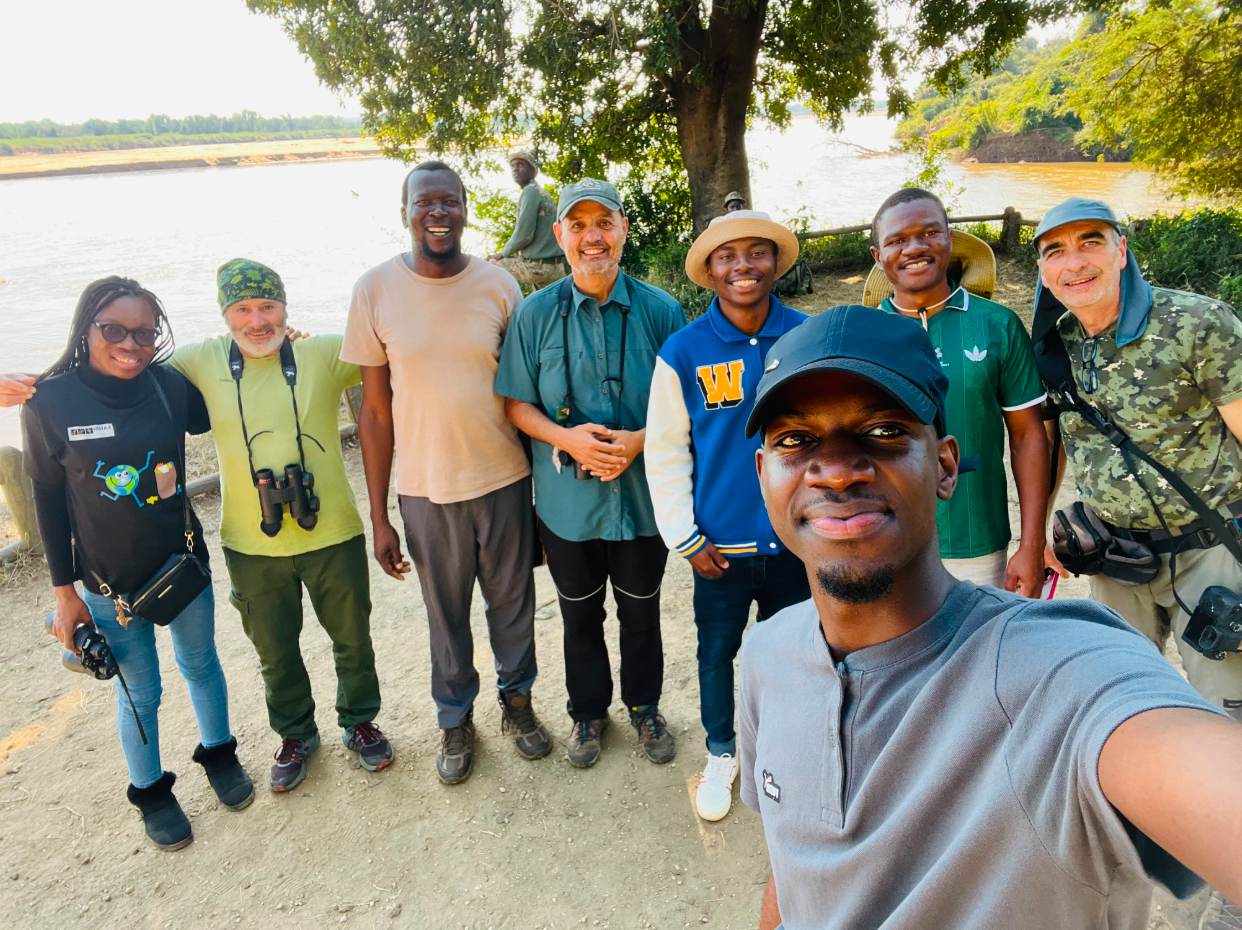
At Crook’s Corner we also met three birdwatchers from Spain who had travelled to Kruger National Park specifically to experience its exceptional birdlife. Their presence reminded us that nature has the unique ability to bring people from different countries together through a shared passion for conservation. To complete this memorable experience, we finally spotted a Common Hippopotamus resting near the meeting point of the three countries.

Later, we arrived at Pafuri Camp, where the peaceful atmosphere provided an opportunity for reflection. Surrounded by magnificent trees, birds, and wilderness, we were reminded of the importance of protecting these exceptional natural environments for future generations.
The greatest lesson from this journey was that nature has the remarkable power to unite people regardless of their backgrounds. Just as rivers merge, birds share the same trees, and wildlife coexist within the same landscapes, people from different cultures can find common ground through the appreciation of nature. Our interactions with visitors from Spain, SANParks staff and fellow South Africans demonstrated that conservation extends far beyond protecting plants and animals-it also builds understanding, respect, peace and friendship among people.

Our experience in the Pafuri region of Kruger National Park was more than an educational excursion. It was a journey of discovery reflection and personal growth. The towering Baobabs, resilient Mopani trees, peaceful wildlife and flowing rivers reminded me that every component of nature has a purpose and contributes to the balance of life. This experience strengthened our appreciation for biodiversity and renewed my commitment to environmental conservation. Above all, it reinforced the belief that by protecting nature, we are not only safeguarding ecosystems but also creating opportunities for peace, unity and sustainable development for generations to come.