

By Nevhulaudzi Murangi, Environmental Educator Officer Intern, Thohoyandou National Botanical Garden
Mashudu Nndanduleni, Senior Horticulturist 2, Thohoyandou National Botanical Garden
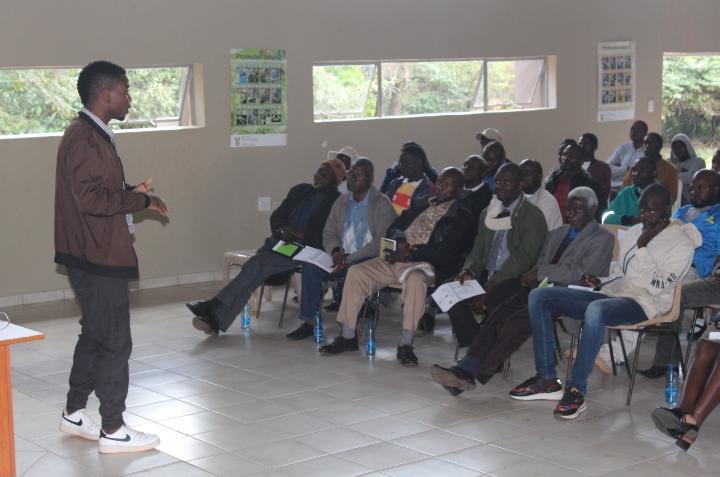
Mr Nevhulaudzi Murangi, an Environmental Education Officer from the Directorate of Biodiversity Education and Public Engagement, together with Mr Nyiko Mthembi from the Directorate of Biodiversity Evidence at South African National Biodiversity Institute (SANBI), delivered an informative presentation on alien invasive plants during the World Biodiversity Day Commemoration held at Mphaphuli Cycad Nature Reserve.
The event was attended by representatives from five traditional leadership of Tshamutshedzi, Tshidzini, Tshiuvhi, Gaba and Mahunguwi, and their communities and various stakeholders, including South African National Parks (SANParks), Department of Forestry, Fisheries and the Environment (DFFE), Thulamela Local Municipality, Limpopo Department of Economic Development, Environment and Tourism (LEDET), and Vhembe District Municipality (VDM).
Mr D.R. Mabasa presented a historical overview of the reserve, highlighted current challenges, and shared the strategic plan for Mphaphuli Cycad Nature Reserve. His presentation was followed by an informative session on the importance of biodiversity, presented by Mr K. Pfuluwani of Limpopo Department of Economic Development, Environment and Tourism. Ms T. Mareda from Thulamela Local Municipality presented on the impact of waste on biodiversity, while Ms K. Mudavhi discussed the legal processes involved in permit applications.
Category 1a: Invasive species that must be combatted and eradicated. Any form of trade or planting is strictly prohibited.
Category 1b: Invasive species which must be controlled and, wherever possible, removed and destroyed. Any form of trade or planting is strictly prohibited.
Category 2: Invasive species, or species deemed to be potentially invasive, in that a permit is required to carry out a restricted activity. Category 2 species include commercially important species such as pine, wattle, and gum trees.
Category 3: Invasive species which may remain in prescribed areas or provinces. Further planting, propagation or trade is prohibited.
Mr Nevhulaudzi presentation also covered the impacts of alien invasive species on the biodiversity, which include the steadily diminishing water resources, as they typically use significantly more water than native vegetation. Invasives may alter natural fire regimes through changes to the flammable biomass. Some invasives change soil chemistry, resulting in soils unsuitable for indigenous species. Eucalyptus trees release chemicals that inhibit indigenous plant growth and may result in severe erosion due to the lack of native vegetation cover.

The community was also educated on how to control Alien Invasive Plants. The following controls were discussed. Mechanical control, which entails damaging or removing the plant by physical action. Chemical control, which involves the use of registered herbicides to kill the target weed. Biological weed control consists of the use of natural enemies to reduce the vigour or reproductive potential of an invasive alien plant. The active participation of community members during the question-and-answer session demonstrated their strong interest in combating the spread of alien invasive species and supporting conservation efforts at Mphaphuli Cycad Nature Reserve. Community members also shared that they have already initiated a river-cleaning campaign and requested assistance with protective clothing to support their environmental activities.
The community was encouraged to contact the Directorate of Biodiversity Evidence at South African National Biodiversity Institute if they identify areas invaded by alien invasive plants within their communities. SANBI continues to play a critical role in the eradication and control of alien invasive species across South Africa.